
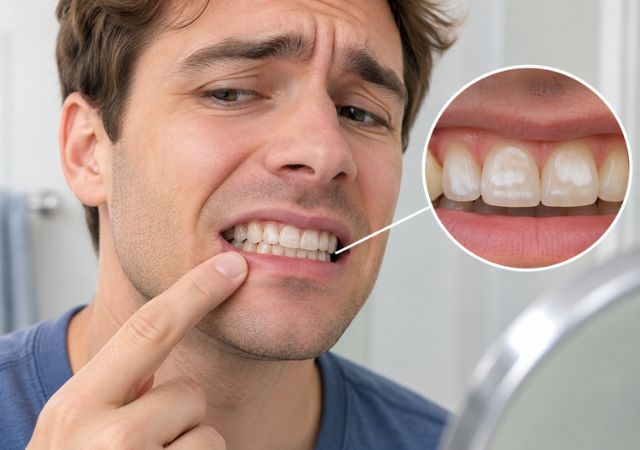
Short answer: White spots on teeth are usually caused by early enamel demineralization, fluorosis, enamel hypoplasia, or plaque buildup around braces. Early spots can often be stopped with fluoride and good hygiene, though the white mark may only partly fade, while older or developmental spots may need microabrasion, resin infiltration, or bonding. Any new or changing white spot can signal early decay, so it is worth having a dentist take a look.
White spots are areas of enamel that have lost minerals or never fully mineralized, which leaves a chalky, opaque patch on the tooth. They are not always just cosmetic, because some mark areas where the enamel is weaker.
Catching them early matters. Early demineralization can often be stopped, but a spot that is left alone can break down into a cavity.
Key Takeaways
- Early action: White spots often start as enamel demineralization, which can often be stopped, and sometimes partly reversed, with prompt care.
- Multiple causes: Early decay, too much fluoride in childhood, poor cleaning around braces, and enamel defects can all cause white spots.
- Treatment depends on the cause: Options range from remineralization to microabrasion, resin infiltration, bonding, or veneers.
- Prevention works: Good brushing, flossing, sensible fluoride use, and regular check-ups help keep new spots from forming.
What Causes White Spots on Teeth?
White spots stem from conditions that affect the enamel’s mineral content or development. Below are the most common causes, from early decay to developmental enamel defects.
Enamel Demineralization (Early Decay)
This is the most common cause, and it can affect anyone at any age. Plaque acids dissolve minerals from the enamel, especially along the gum line or around braces, and it is more likely with poor brushing, frequent sugary snacks or drinks, or a dry mouth. When it is caught before the surface breaks down, it can often be stopped, and the spot may partly fade.
Fluorosis
Fluorosis affects children of any gender and becomes visible once the permanent teeth come in. It happens when too much fluoride is swallowed while those teeth are forming, typically up to about age eight, such as from swallowing toothpaste, and it leaves white or sometimes brown streaks or flecks.
Most cases are very mild and mainly cosmetic, and your local water utility can tell you the fluoride level in your water.
Enamel Hypoplasia
Enamel hypoplasia occurs when the teeth do not develop enough enamel, leaving the surface thin, uneven, or marked with small pits and grooves. It can happen during childhood due to poor nutrition, high fevers, certain medications, or an injury to a baby tooth. Because the enamel is thinner than normal, the teeth are more likely to develop cavities.
Enamel Hypomineralization (Including MIH)
Hypomineralization is different, because the enamel is normal in thickness but did not fully mineralize, so it looks chalky white, yellow, or brown. The most common form is molar-incisor hypomineralization (MIH), which affects the first permanent molars and often the front teeth in children, and the exact cause is not fully understood. These areas are softer, more sensitive, and more decay-prone, so they should be monitored closely.
Orthodontic Treatment
White spots around brackets are especially common in teens and adults who wear braces, because plaque collects around the brackets and is easy to miss when brushing.
Skipped flossing and frequent sugary snacks or drinks make it worse, and the spots often show up as square outlines once the braces come off.
Careful daily cleaning and regular preventive care lower the risk, and removable clear aligners can make brushing and flossing easier.
How Do Dentists Diagnose White Spots?
A dentist looks beyond the visible spot to understand the enamel underneath. This helps separate active demineralization, developmental defects, and fluorosis.
- Examine the spot. The dentist notes its location, size, and texture.
- Check the surface. On a clean, dry tooth, a dull, rough spot suggests active mineral loss, while a shiny, smooth spot suggests an older, stable one.
- Review your history. The dentist asks about your diet, fluoride exposure, medical history, and any past orthodontic treatment.
- Take X-rays if needed. Digital X-rays help check for decay between teeth, since the spot itself is judged by looking at the cleaned, dried tooth.
What Are the Best Treatments for White Spots?
The best treatment depends on the cause, the depth of the spot, and how much it bothers you.
Treatments either rebuild the enamel, hide the discoloration, or remove the affected layer.
Remineralization Therapies
These treatments help the enamel regain minerals. They work best on superficial spots caused by early demineralization.
Fluoride is the foundation. Dentists can apply fluoride varnish or gel in the office, and ADA guidance suggests repeating it every 3 to 6 months for non-cavitated spots on smooth surfaces. Daily fluoride toothpaste supports the same process at home.
Fluoride is better at stopping a spot from progressing than at erasing it. The white mark may fade only partly, and spots left after braces often shrink only slightly on their own.
Calcium phosphate pastes such as MI Paste are sometimes added, but the evidence for extra benefit is mixed. MI Paste contains milk protein, so it is not suitable for people with a milk protein allergy.
Remineralization is unlikely to help spots caused by fluorosis or developmental defects, because those formed during tooth development.
Enamel Microabrasion
Microabrasion is a gentle treatment that removes a very thin layer of the tooth’s outer surface to reduce white spots or discoloration. The dentist uses a special paste containing mild abrasive ingredients to gently polish the enamel and smooth out the affected areas.
It works best for superficial spots, such as those from mild fluorosis, where the discoloration sits in the outer enamel. It is less suitable for deeper spots, where too much enamel could be lost.
The dentist controls the depth to preserve as much healthy enamel as possible. Results are often visible right away and last because the discolored layer is removed, though it can take more than one visit. The enamel removal is permanent.
Resin Infiltration (Icon Treatment)
Resin infiltration fills the porous enamel with a thin liquid resin. The dentist first opens the pores with a mild acid etch, then applies the resin and hardens it with a light.
The resin replaces trapped air and water in the spot, so the area looks more like the healthy enamel around it. The etch removes a thin layer of surface enamel, but far less than drilling.
It is best for non-cavitated white spots, especially those left after braces. In studies, it masked these spots better than no treatment and better than microabrasion at 12 months. If a spot has already broken down into a cavity, a tooth-colored filling from restorative dentistry is the usual fix.
Dental Bonding
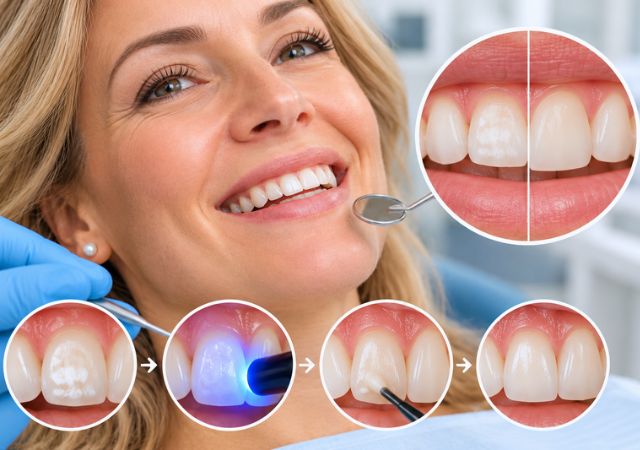
For deeper or more visible spots, bonding covers the spot with tooth-colored composite resin. The dentist shapes it to match your tooth and hardens it with a light.
Bonding is conservative compared with veneers, since it needs little or no removal of healthy tooth structure.
The material can stain over time and typically lasts about 5 to 10 years before it needs repair or replacement.
Porcelain Veneers or Crowns
When white spots are severe, cover a large area, or come with significant enamel defects, porcelain veneers or ceramic crowns may be the best long-term option.
A veneer is a thin shell bonded to the front of the tooth, and a crown covers the whole tooth. Both can hide extensive discoloration and correct shape.
Placing most porcelain veneers requires removing a thin layer of enamel, and that step is permanent. Veneers last 10 to 20 years in many cases, depending on bond quality and bite forces.
A crown is usually the better choice if the tooth also has major structural damage, such as a large filling or a deep crack.
If you grind your teeth, talk to your dentist about a custom night guard before veneers, since heavy bite forces can shorten the life of the restoration. If you have been told you need veneers or crowns and want another view, a free second opinion can help.
| Treatment | Best for | Visits | How long it lasts |
|---|---|---|---|
| Remineralization | Early, superficial white spots | Ongoing home care plus dental visits | Needs ongoing maintenance |
| Microabrasion | Mild fluorosis and superficial spots | One or more visits | Long-lasting, but the enamel removal is permanent |
| Resin infiltration | Non-cavitated spots, often after braces | Usually one visit | Long-term data is limited, and it may need re-treatment |
| Dental bonding | Deeper or more visible spots | Usually one visit | About 5 to 10 years, and it may stain |
| Porcelain veneers or crowns | Severe defects or extensive discoloration | Multiple visits | Veneers often 10 to 20 years, crowns 15 years or more |
Insurance coverage varies, and many white spot treatments are considered cosmetic.
Can You Prevent White Spots on Your Teeth?
Yes, good daily habits and careful fluoride use prevent many white spots. Brush twice a day with fluoride toothpaste and floss once a day. This removes the plaque that feeds acid-producing bacteria.
For children, supervise brushing. Use a smear of fluoride toothpaste, about the size of a grain of rice, from the first tooth until age 3, then a pea-sized amount from ages 3 to 6. Teach children to spit, not rinse, which lowers the risk of fluorosis. Fluoride mouth rinses are for ages 6 and older. The ADA offers fluoride recommendations for each age group.
During orthodontic treatment, cleaning around brackets and wires is critical. Special brushes and fluoride rinses can help.
Regular dental check-ups and cleanings catch demineralization early, often before a visible white spot forms or worsens.
What Happens if White Spots Are Left Untreated?
A white spot marks weakened enamel that is more vulnerable to acid than healthy enamel. Over time, the outer layer can collapse and form a cavity. A cavity needs a filling or, if it is extensive, a crown.
Waiting until decay reaches the dentin means a larger, more invasive, and more costly restoration.
Hypoplastic or hypomineralized enamel is more decay-prone and can be sensitive, so these teeth need closer monitoring.
If you notice new spots or changes in existing ones, a prompt exam can prevent bigger problems. The dentist checks the spot on a clean, dry tooth and may take X-rays to look for decay between teeth.
When Should You See a Dentist for White Spots?
Any new or changing white spot deserves a dental evaluation. Schedule a visit soon if the spot comes with sensitivity or pain, or if it showed up after braces. Early care can stop demineralization before it turns into a cavity.
Frequently Asked Questions
Are white spots on teeth serious?
White spots can be the first stage of a cavity, so they deserve attention even when they are not an emergency. Mild fluorosis is mainly a cosmetic finding, while hypoplastic or hypomineralized enamel is more decay-prone and should be monitored.
Do white spots on teeth go away on their own?
Very early spots from demineralization can improve with fluoride, good hygiene, and a dentist’s care. Even early spots usually fade only partly. Spots from fluorosis or other developmental defects formed during tooth development and will not go away without treatment.
What gets rid of white spots on teeth?
Options include remineralization, microabrasion, resin infiltration, bonding, and in some cases porcelain veneers. The right one depends on the cause and depth of the spot, which a dentist can determine.
Will teeth whitening get rid of white spots?
Whitening does not remove white spots, and it can make them look more noticeable at first because the surrounding enamel gets lighter. Ask your dentist about the right order of treatment, and see our teeth whitening page for how professional whitening works.
How much does it cost to fix white spots on teeth?
Cost depends on the treatment, the number of teeth, and the office. In general, remineralization costs the least, microabrasion, resin infiltration, and bonding fall in the middle, and veneers and crowns cost the most. Ask for an estimate before you start.
Our practice is out-of-network, but we can help you work with your out-of-network PPO benefits, and CareCredit financing is available.
What toothpaste gets rid of white spots?
No over-the-counter toothpaste can fully remove white spots from fluorosis or significant demineralization. An ADA-accepted fluoride toothpaste can help stop very early spots from progressing and keep new ones from forming. Your dentist may recommend a prescription-strength fluoride toothpaste.
Schedule a White Spot Evaluation in Mandarin, Jacksonville
If you notice new or changing white spots on your teeth, call (904) 268-0904 to book an evaluation with Dr. Quinton Pooler in Mandarin, Jacksonville. We will examine your teeth, check for early decay, and talk through your options.
When you call, have ready which teeth have white spots, how long you have noticed them, any past dental work on those teeth, and your insurance provider.
Note: This content is for informational purposes only and does not replace a clinical examination or professional dental advice. Contact our office to discuss your specific situation.